Create DynamoDB table
In this step, we will add a DynamoDB table resource to the SAM template and deploy it using AWS SAM CLI.
Edit SAM Template
Open the template.yaml file in the fcaj-book-shop folder.
Add a new parameter booksTableName under the
Parameterssection:booksTableName: Type: String Default: Books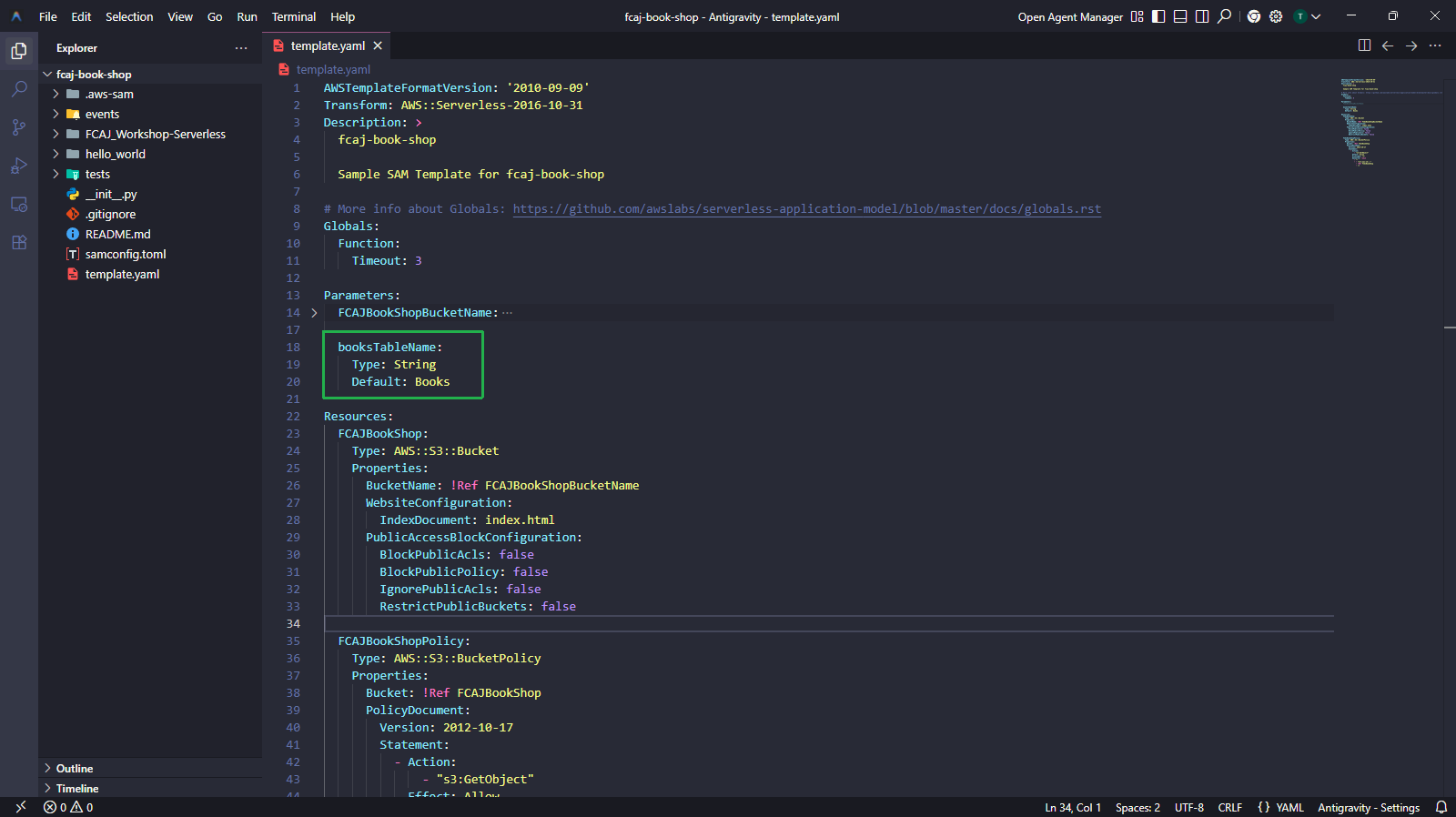
Add the BooksTable resource under the
Resourcessection:BooksTable: Type: AWS::DynamoDB::Table Properties: TableName: !Ref booksTableName BillingMode: PAY_PER_REQUEST AttributeDefinitions: - AttributeName: id AttributeType: S - AttributeName: rv_id AttributeType: N - AttributeName: name AttributeType: S KeySchema: - AttributeName: id KeyType: HASH - AttributeName: rv_id KeyType: RANGE LocalSecondaryIndexes: - IndexName: name-index KeySchema: - AttributeName: id KeyType: HASH - AttributeName: name KeyType: RANGE Projection: ProjectionType: ALL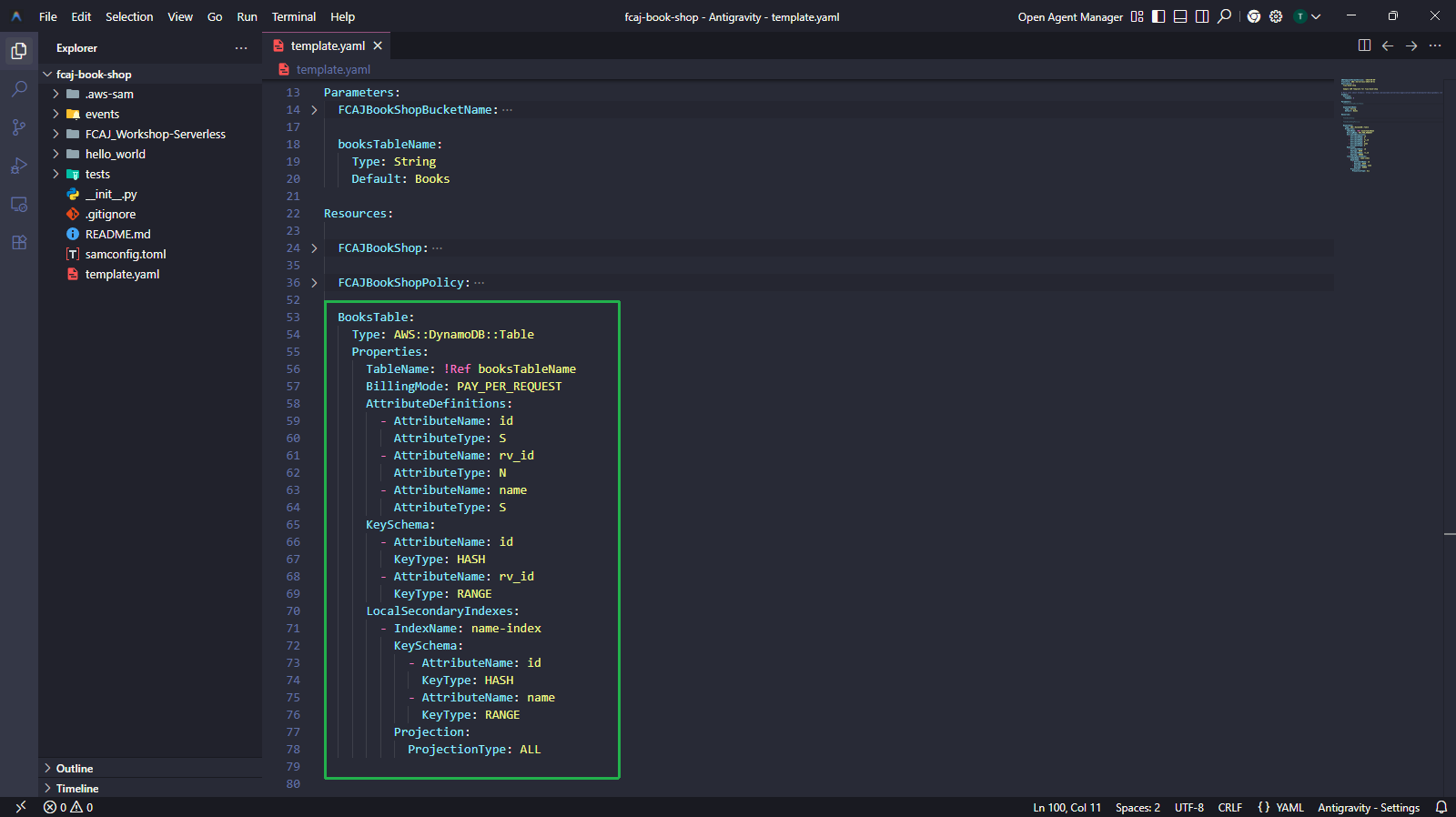
The above script creates the Books table in DynamoDB with:
- Partition key:
id(String) - Sort key:
rv_id(Number) - Local Secondary Index:
name-indexwith sort keyname(String), projecting all attributes - Billing mode: PAY_PER_REQUEST (On-demand)
Build and Deploy
Run the following commands to build and validate the SAM template:
sam build
sam validate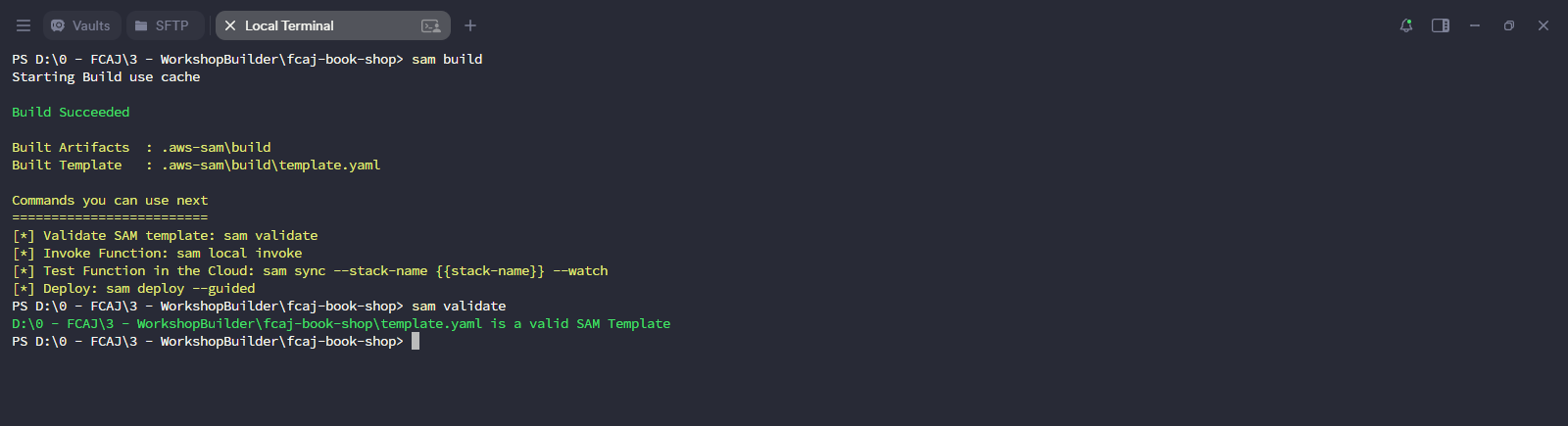
Deploy the updated stack:
sam deployThe changeset will show a new resource
BooksTableof typeAWS::DynamoDB::Tablebeing added. Enteryto confirm the deployment.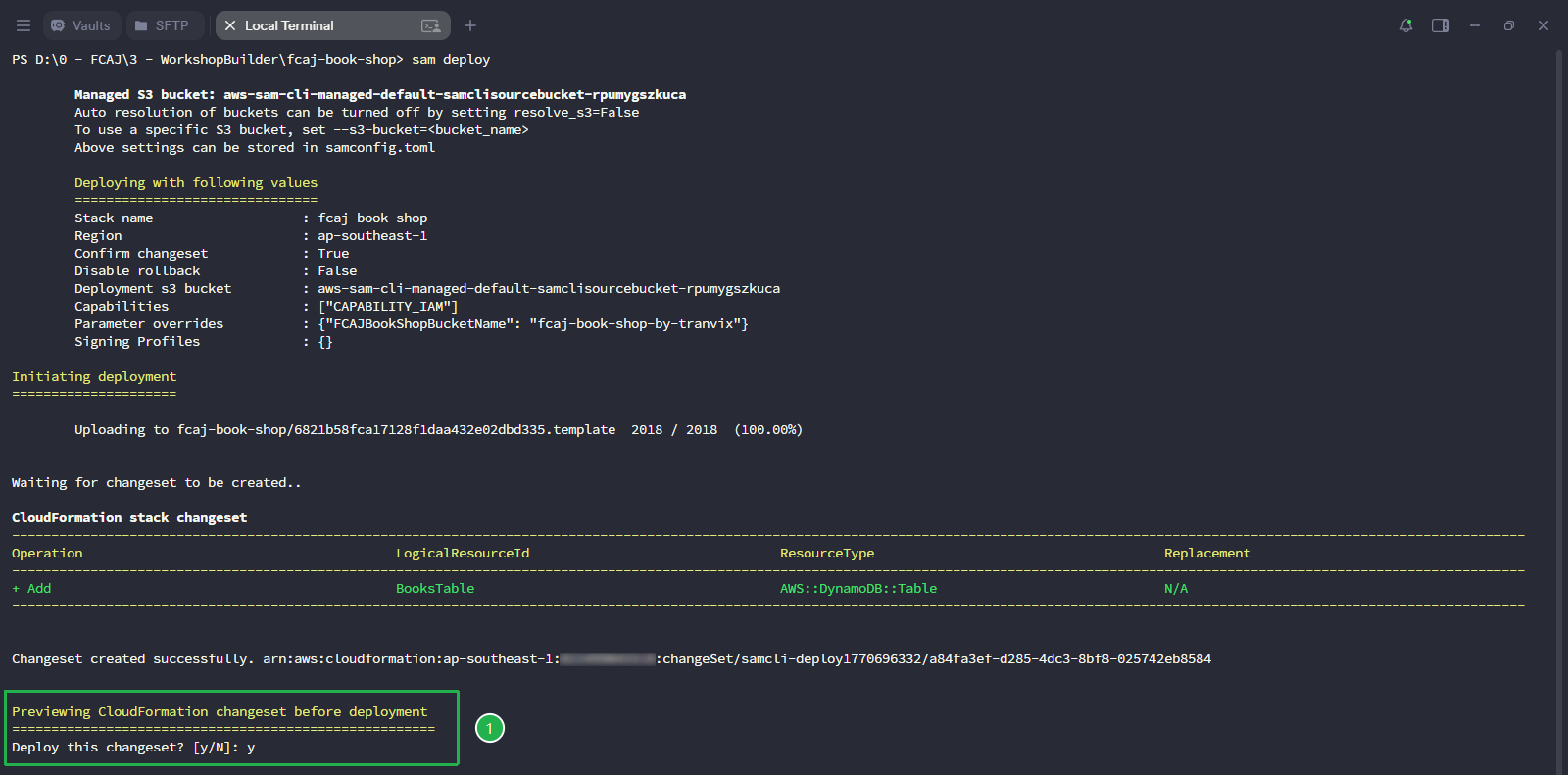
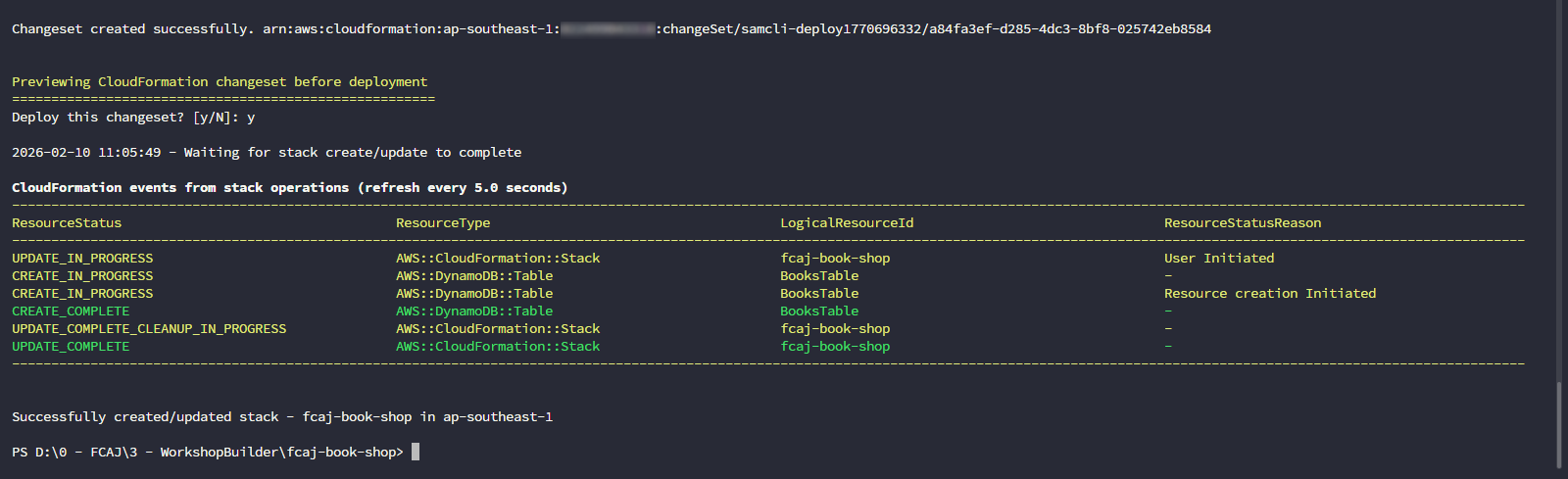
Wait for the deployment to complete. You should see Successfully created/updated stack.
Verify on AWS Console
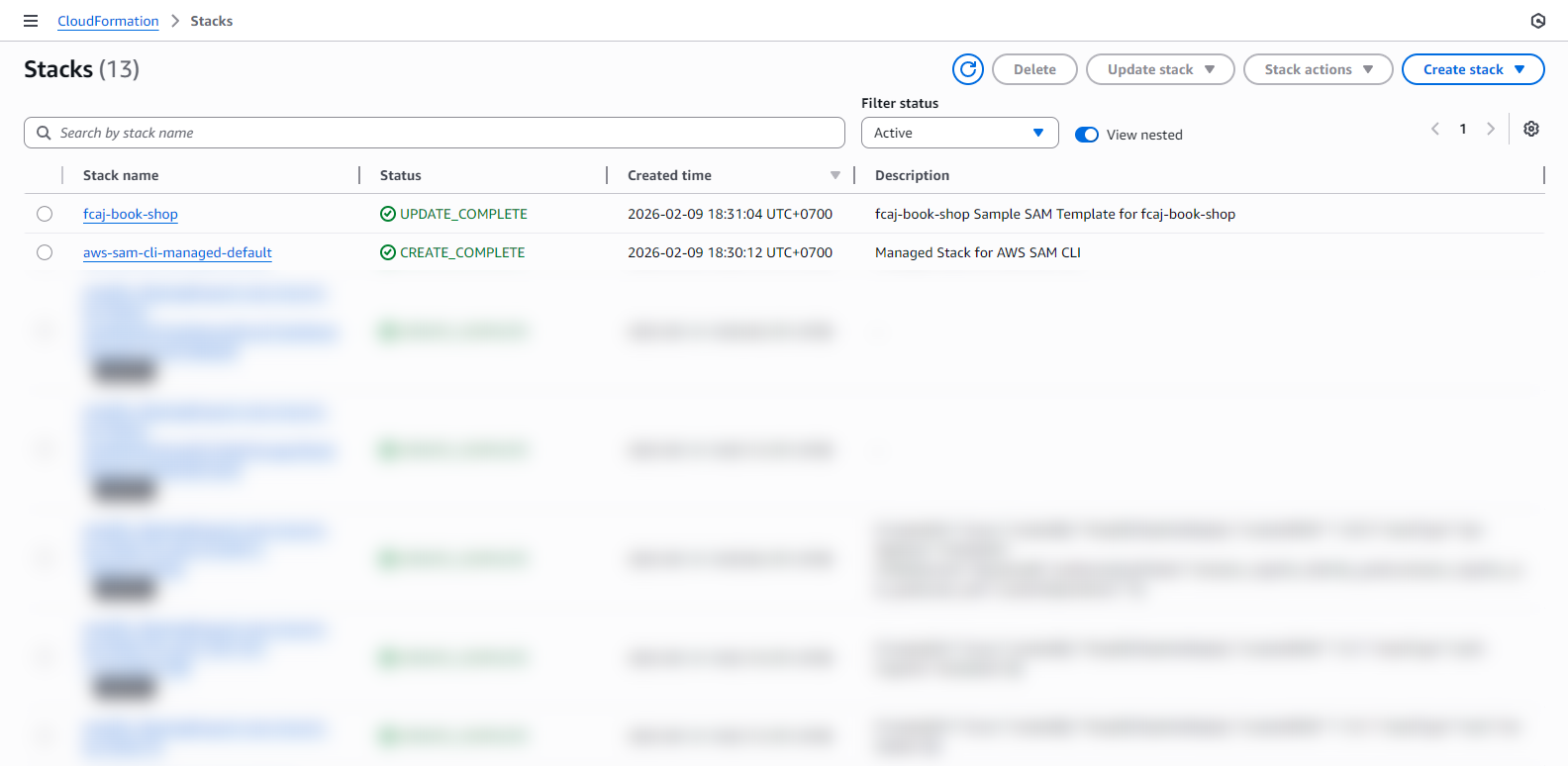
Open the CloudFormation console to verify the stack status is UPDATE_COMPLETE.
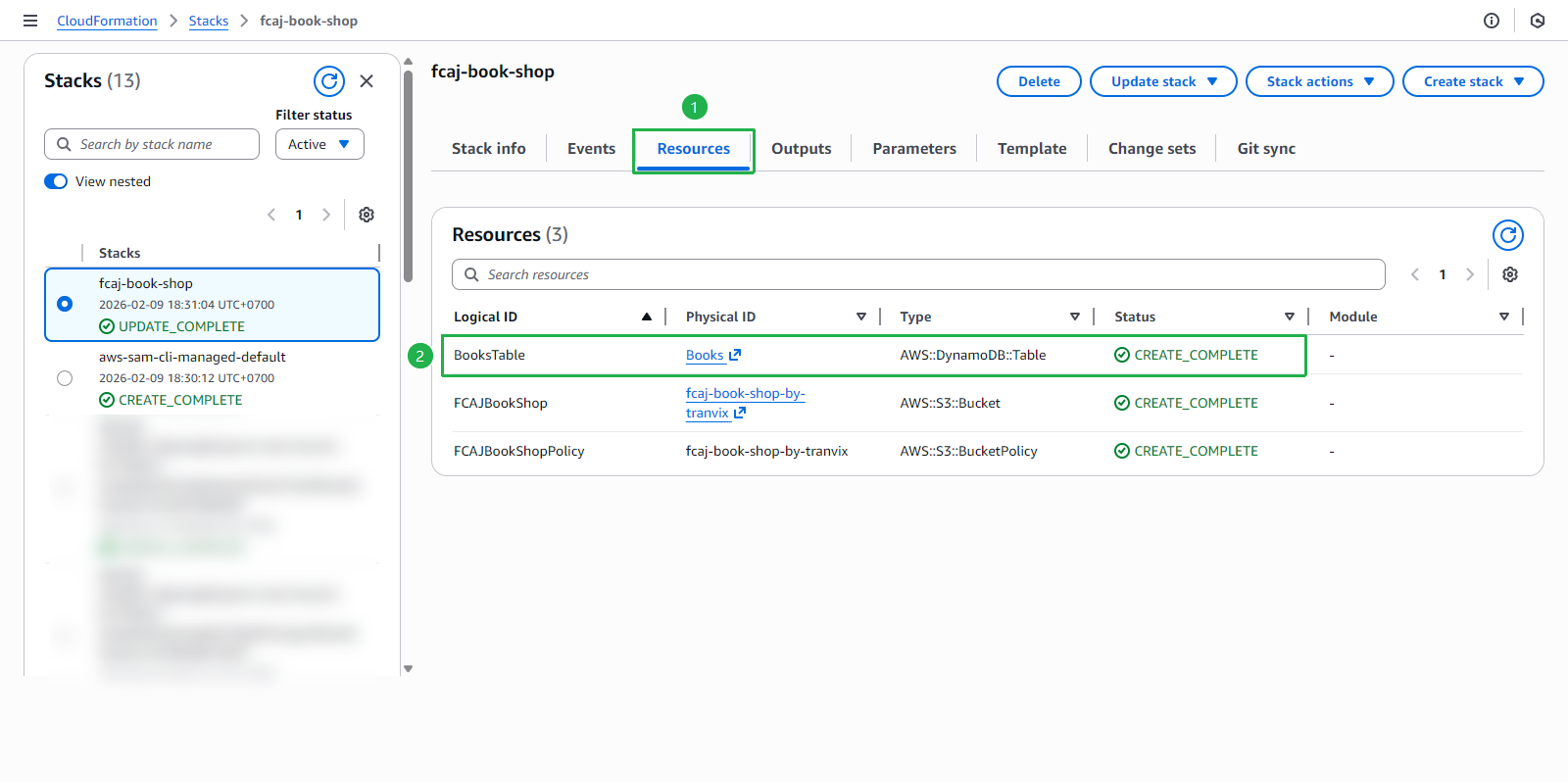
Click on the fcaj-book-shop stack, switch to the Resources tab. You should see the new BooksTable resource with status CREATE_COMPLETE.
Open the DynamoDB console. At the Tables page, you should see the Books table with status Active.
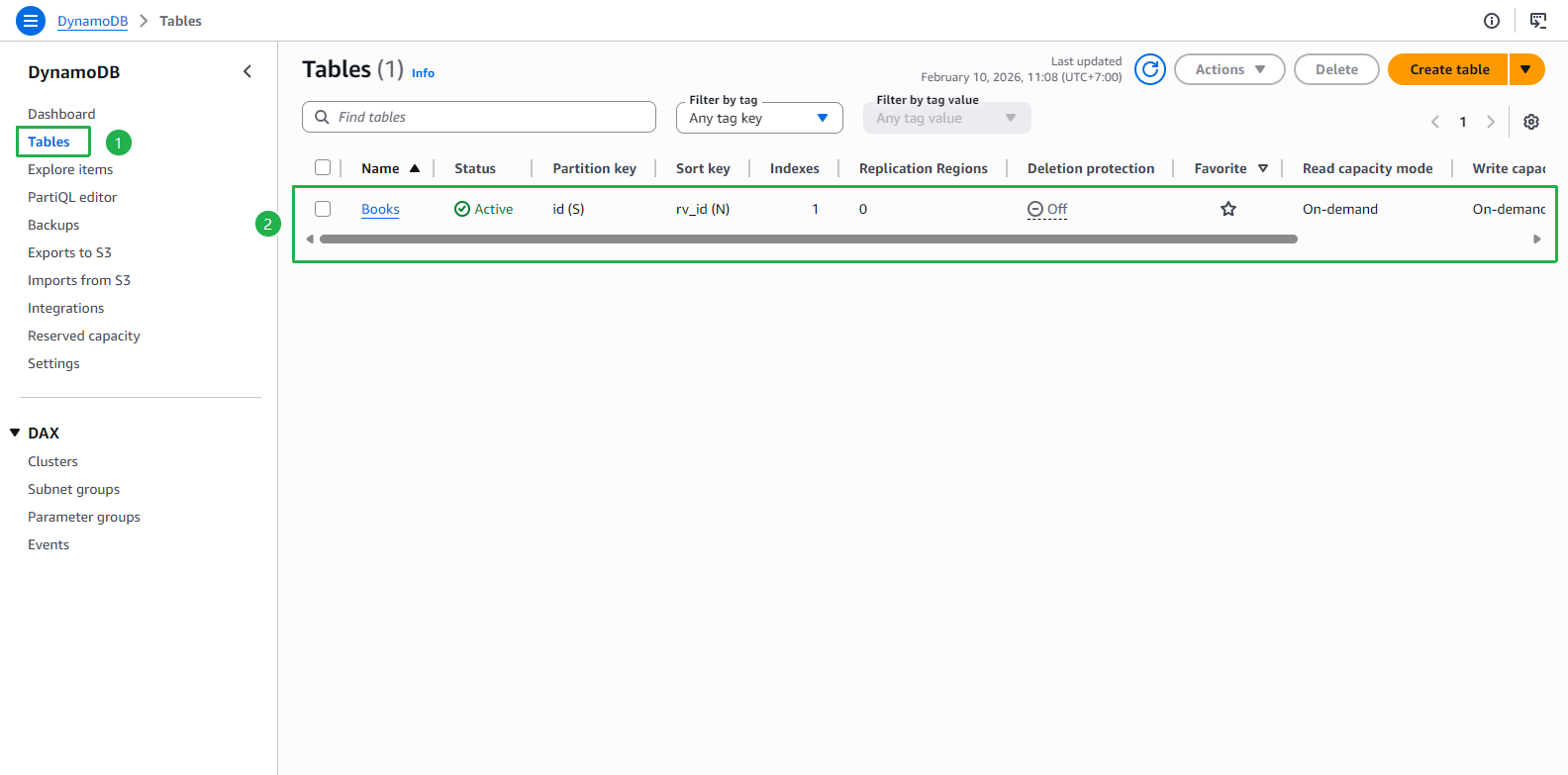
Click on the Books table to view its details:
- Check the General information section: Partition key is
id (String), Sort key isrv_id (Number), and Capacity mode is On-demand.
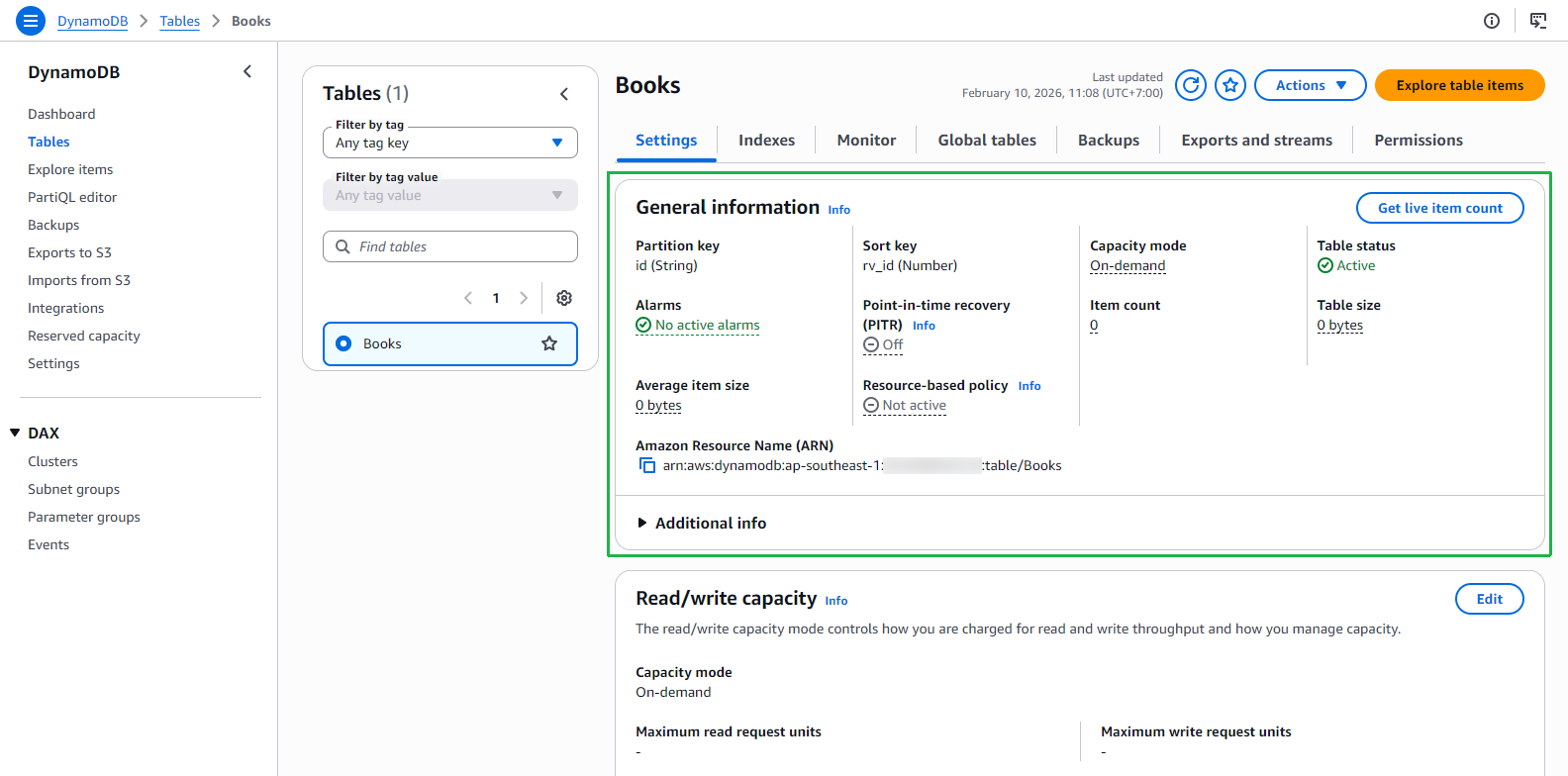
- Check the General information section: Partition key is
Click on the Indexes tab:
- Verify the Local secondary indexes section shows
name-indexwith Partition keyid (String)and Sort keyname (String).
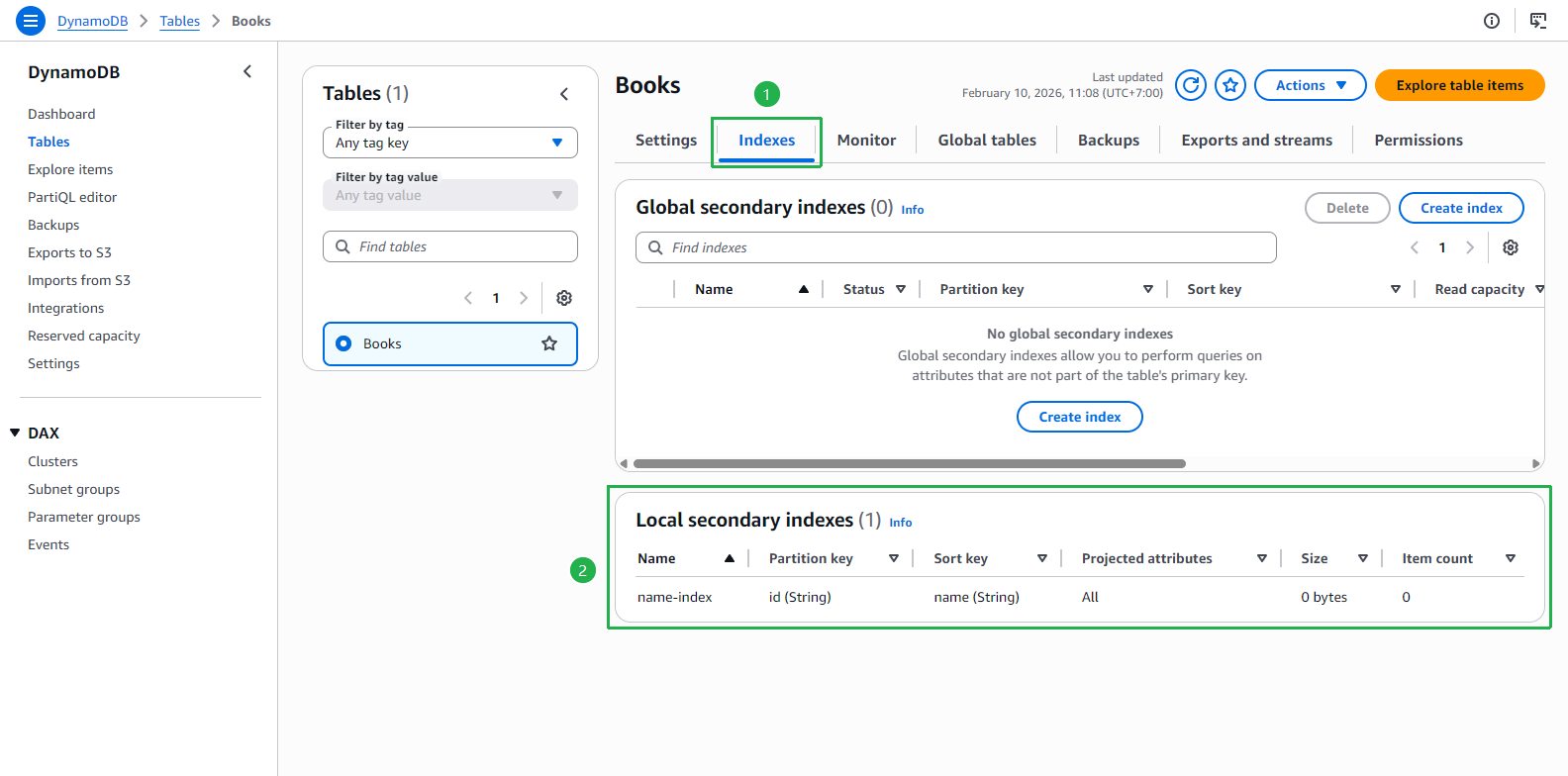
- Verify the Local secondary indexes section shows
You have now successfully created the Books table with the Local Secondary Index name-index.
Add Sample Data
- To add data to the table, download the file below. Then, open the file and replace all AWS-REGION with the region where you created your S3 bucket (e.g.,
ap-southeast-1).
- Data used to import into DynamoDB table: dynamoDB.json
Make sure to replace all occurrences of AWS-REGION in the dynamoDB.json file with your actual AWS region before running the import command.
Run the following command at the directory where you saved the dynamoDB.json file:
aws dynamodb batch-write-item --request-items file://dynamoDB.json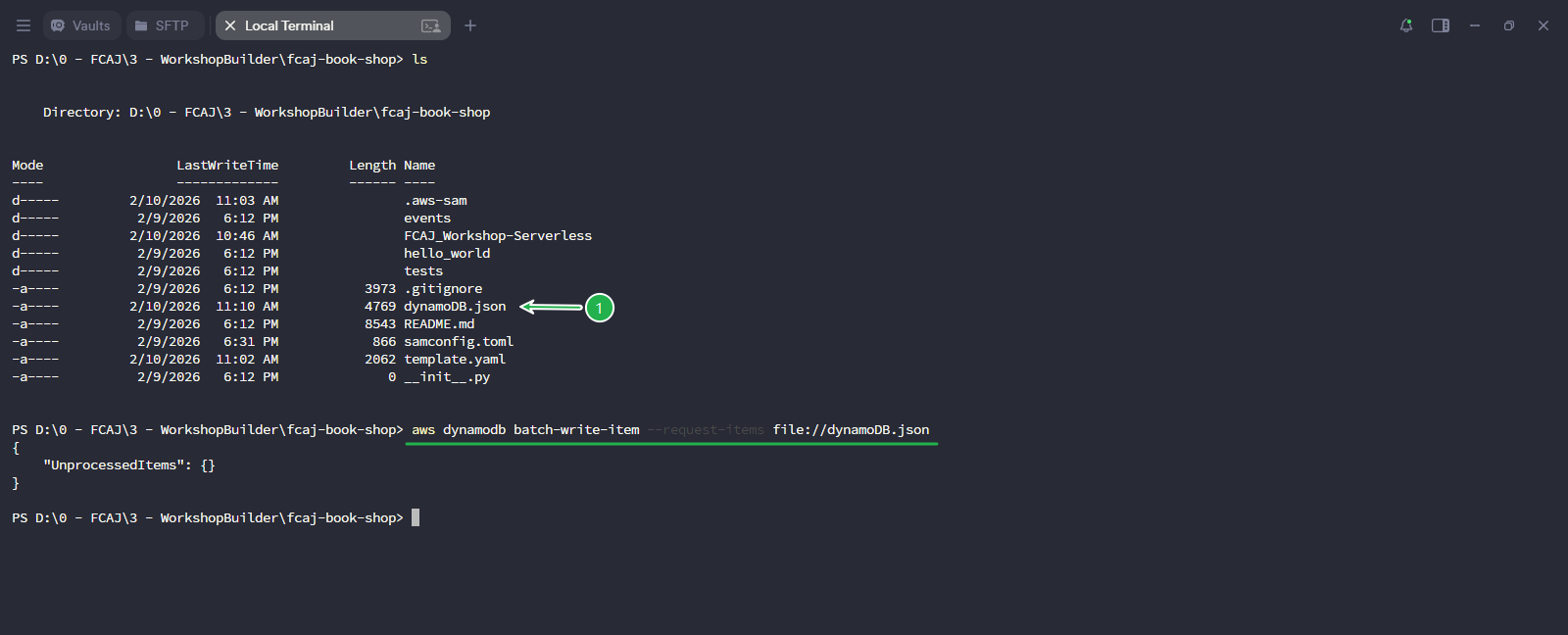
If the output shows "UnprocessedItems": {}, it means all items were successfully written to the table.
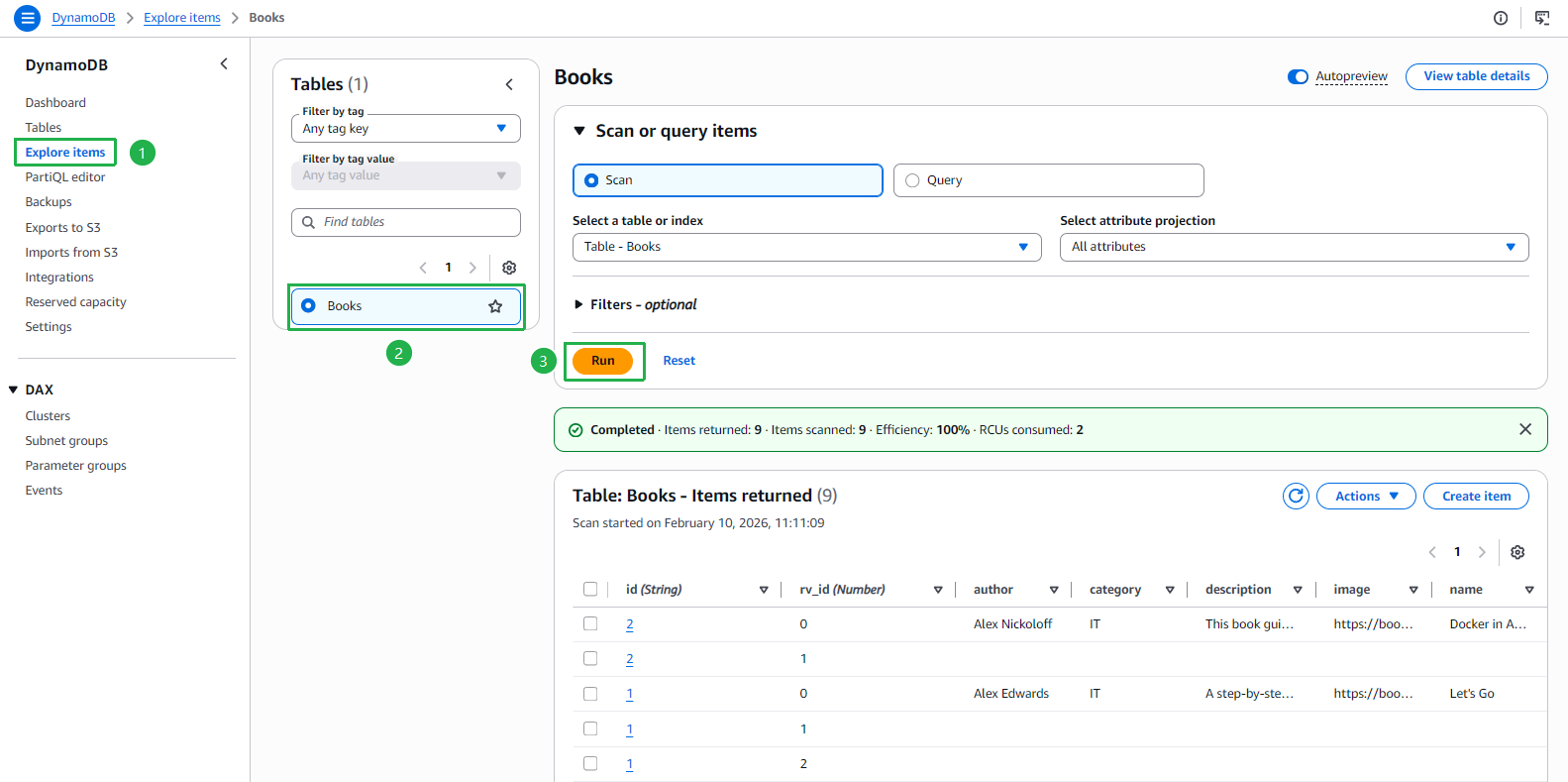
To verify the data, go to the DynamoDB console, click Explore items in the left sidebar, select the Books table, and click Run to scan the table. You should see 9 items returned.